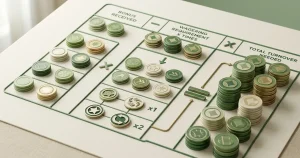
JetTon Sky Priority uses seven levels and recurring loyalty benefits

Table of Contents
- Sky Priority adds a seven-level progression layer to the account
- Tier progression should follow the budget, not set it
- Cashback returns only part of qualifying activity
- Tournaments create a separate incentive from ordinary game results
- Keep loyalty rewards inside the same gambling budget as ordinary play
- Frequent rewards can change how often a player thinks about gambling
- A loyalty reward credited later should be treated as a new gambling decision
- VIP activity still uses the same crypto payment rails
- Questions about JetTon Sky Priority
- Sky Priority changes account incentives, not the underlying gambling risk
Section element
Loyalty program
JetTon’s loyalty program is called Sky Priority. It has seven levels and combines tier progression with recurring account benefits. The useful question is how those incentives affect gambling behavior, not how large a loyalty label appears on the account.
Section element
- ProgramSky Priority
- Levels7
- Benefit styleRecurring loyalty rewards
Sky Priority adds a seven-level progression layer to the account
The program organizes loyalty into seven levels. A tier system can make account activity feel more structured because progress is visible over time and higher levels can unlock different benefits. That structure does not change the mathematics of the games themselves.
For a player, the important distinction is between a benefit that is earned from activity already planned and activity undertaken mainly to reach the next level. The first can reduce the net cost of an existing gambling pattern; the second can increase total exposure simply because a progress bar or status target is close.
Tier progress
Progress creates a visible long-term target, which can be useful for understanding account status but can also encourage extra play.
Recurring benefits
Cashback or other account rewards should be evaluated after considering their qualifying rules and any conditions attached to the credit.
Separate game risk
A loyalty reward does not reduce the house advantage of the slot, live table or Original used to earn it.
Tier progression should follow the budget, not set it
A seven-level ladder can create a strong completion incentive. The safest way to use it is to set the gambling budget before looking at the distance to the next tier. If normal activity happens to move the account upward, the new level can be treated as a side effect rather than a spending target.
Chasing status reverses that order. Once the next level becomes the reason for another deposit or a larger stake, the loyalty program has started to determine the gambling budget. That can turn a nominal reward into a more expensive objective than the benefit itself.
- Set a money limit and session limit before play.
- Ignore the next-tier distance when deciding whether to continue.
- Do not increase stake size to accelerate progression.
- Evaluate any reward only after the amount already spent to qualify for it.
Cashback returns only part of qualifying activity
Sky Priority includes recurring cashback-style benefits. Cashback can reduce part of a loss under the program rules, but it does not turn losing wagers into profitable ones or eliminate the house edge. Its practical value depends on which activity qualifies, how the amount is calculated and whether any conditions apply after the credit arrives.
The right comparison is not “cashback versus nothing” in isolation. Compare the benefit with the gambling activity required to receive it. If a player spends more than planned in order to increase a future cashback amount, the extra exposure can easily outweigh the value returned.
| Question | Why it matters |
|---|---|
| What activity qualifies? | Only eligible play can contribute to the benefit. |
| How is the base calculated? | Turnover, losses and deposits are different measures. |
| When is the benefit credited? | Timing affects whether it belongs to the current or a later session. |
| Are conditions attached? | A credited amount may still be subject to account or promotional rules. |
Tournaments create a separate incentive from ordinary game results
JetTon also uses tournament-style activity around casino play. A tournament prize pool is shared under the event rules, so the headline amount is not the amount an individual player can expect to receive. Ranking mechanics can also encourage longer sessions or larger wagering volume than normal play.
Before participating, separate the tournament objective from the underlying game. The slot or live game still settles each wager under its own rules, while the tournament adds a second layer based on points, ranking or another event metric.
- Read which games or actions produce tournament points.
- Set the gambling budget without assuming any tournament prize.
- Avoid increasing stakes simply to climb the ranking.
- Stop at the planned session limit even if the leaderboard position is close to a reward.
Keep loyalty rewards inside the same gambling budget as ordinary play
A loyalty program works best as an account feature, not as a reason to expand the bankroll. Decide the maximum loss and session duration before play begins. Deposits made to reach a tier, protect a leaderboard position or increase a future cashback amount should still count against that same limit.
It is also useful to separate real-balance money from promotional value mentally. A reward can feel like “free” funds, but wagering it still consumes time and can encourage continued play after the original session should have ended. If a benefit arrives after a session, there is no requirement to use it immediately.
Responsible gambling tools and cooling-off options are more important than loyalty status if gambling starts interfering with finances, sleep, work or relationships. A status level should never be treated as something that must be preserved at personal cost.
Tier progress is also easier to judge over a fixed calendar period. Looking at total deposits, withdrawals, gambling days and session length together gives a clearer picture of the activity behind a loyalty level than the level name alone. If the activity needed to maintain status is no longer comfortable, dropping a tier is financially preferable to extending play just to preserve an account badge.
Frequent rewards can change how often a player thinks about gambling
A loyalty program does more than change the value attached to one session. Recurring bonuses, cashback and status progress can create repeated reasons to reopen the account. That can increase session frequency even when individual stakes remain unchanged.
Frequency matters because gambling exposure is cumulative. Several short sessions can involve as much or more wagering than one longer session, especially with fast slots or Originals. Tracking only the size of each deposit can therefore miss how often money is being put at risk.
- Track gambling days as well as deposit amounts.
- Keep a session time limit even when the account has a new reward.
- Do not use a loyalty notification as an automatic reason to log in.
- Take a break if status, cashback or tournaments begin to determine the weekly routine.
Sky Priority can organize account benefits, but the user still decides whether and when to gamble. Keeping that decision independent of notifications and tier progress is a practical way to stop loyalty mechanics from setting the pace of play.
A loyalty reward credited later should be treated as a new gambling decision
Recurring benefits can arrive after the session that generated them. That timing can blur the boundary between one gambling session and the next because a new credit may feel like unfinished business rather than a separate choice. There is no need to use a loyalty reward immediately just because it has appeared in the account.
Before playing a credited reward, decide whether another gambling session fits the existing time and money limits. If the original budget has already been used, the reward can wait. Starting a new session solely to avoid “wasting” a benefit can turn a loyalty feature into a reason for additional play.
The same principle applies to tier milestones. A reward for reaching a level belongs to activity that has already happened. It should not create an obligation to continue wagering in order to preserve momentum or justify earlier spending.
VIP activity still uses the same crypto payment rails
JetTon is crypto-native, so loyalty activity sits inside the same wallet and network environment as ordinary casino play. A higher account level does not change the need to match assets, networks and withdrawal addresses carefully. Blockchain fees and crypto price movement also remain independent of loyalty rewards.
More frequent deposits or withdrawals can create more opportunities for address and network mistakes. Keep the payment process deliberate: select the asset, match the network, compare the destination and retain transaction IDs for transfers that affect the casino balance.
The payments section covers the wallet and network mechanics, while the games section explains the underlying formats used during loyalty activity.
Questions about JetTon Sky Priority
What is JetTon Sky Priority?
Sky Priority is JetTon’s seven-level loyalty program with recurring account benefits.
Does loyalty cashback remove gambling risk?
No. Cashback can return part of qualifying activity under the program rules, but it does not change the house edge or guarantee a positive result.
Should I wager more to reach the next Sky Priority level?
A safer approach is to set the gambling budget first and allow tier progress to follow normal activity rather than using status as a reason to increase spending.
Sky Priority changes account incentives, not the underlying gambling risk
The seven-level structure can make loyalty progress and recurring benefits more visible, but those rewards should remain secondary to a fixed gambling budget. Cashback, tournaments and tier progress do not alter game mathematics, crypto transfer risk or the possibility of losing the full amount set aside for play.